






Large indoor plants have become an essential part of modern home design. They do much more than decorate a room. A well-placed plant can soften hard edges, add warmth to a space, and create a stronger connection to nature. Whether you live in a spacious house or a compact apartment, the right plant can transform an ordinary corner into a vibrant focal point.
Beyond their visual appeal, indoor plants are often associated with improved well-being and a more relaxing environment. Many homeowners choose larger plants because they make an immediate impact and require fewer individual pots compared to collections of smaller plants.
In this guide, you’ll discover some of the most beautiful large indoor plants, their benefits, and practical tips for keeping them healthy and thriving.
| Label | Information |
|---|---|
| Topic | Large Indoor Plants |
| Category | Indoor Gardening |
| Purpose | Enhance home spaces with greenery |
| Plant Size | Typically 4–10+ feet tall |
| Best For | Homes, apartments, and offices |
| Main Benefit | Adds beauty and natural charm |
| Light Needs | Varies by plant species |
| Watering | Moderate and consistent |
| Popular Choices | Monstera, Fiddle Leaf Fig, Rubber Plant |
| Maintenance Level | Low to moderate |
| Air Quality Impact | Helps create a fresher environment |
| Styling Use | Focal points and empty corners |
| Ideal Placement | Living rooms, offices, and entryways |
Why Large Indoor Plants Are So Popular
Large indoor plants bring a sense of balance and life into a home. Unlike smaller decorative plants, they can stand on their own as statement pieces. Interior designers often use them to fill empty spaces, frame furniture, and add natural texture to modern interiors.
They also help create a calming atmosphere. The presence of greenery can make a room feel more welcoming and comfortable. Large plants are particularly effective in open-plan living spaces where they add visual interest without creating clutter.
Another reason for their popularity is versatility. From tropical palms to elegant trees, there is a large indoor plant suitable for almost every style of home.
Choosing the Right Plant
Before bringing home a large indoor plant, consider the conditions of your space. Light is often the most important factor. Some plants thrive in bright indirect light, while others tolerate lower-light environments.
You should also think about maintenance. Certain plants need frequent watering and humidity, while others are more forgiving and suitable for beginners.
Room size matters as well. A plant that eventually grows several feet tall needs enough space to develop without overwhelming the room.
1. Fiddle Leaf Fig
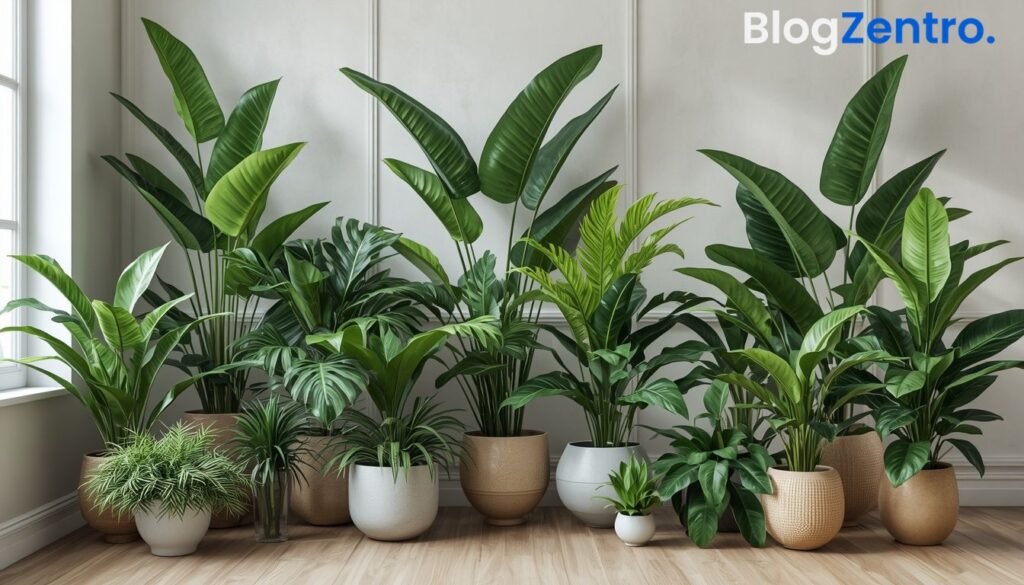
The Fiddle Leaf Fig is one of the most recognizable indoor plants. Its large, glossy leaves create a dramatic appearance that instantly elevates a room.
This plant prefers bright indirect sunlight and consistent watering. While it can be somewhat sensitive to environmental changes, its striking appearance makes the extra care worthwhile.
A Fiddle Leaf Fig works beautifully in living rooms, home offices, and bright corners where it can become the center of attention.
2. Bird of Paradise
For a tropical look, few plants can compete with the Bird of Paradise. Its large paddle-shaped leaves bring a lush and exotic feel indoors.
This plant enjoys bright light and benefits from regular watering during active growth periods. With proper care, it can grow impressively tall and create a stunning visual impact.
The Bird of Paradise is ideal for spacious rooms with plenty of natural light.
3. Rubber Plant
The Rubber Plant is known for its thick, glossy leaves and relatively easy maintenance requirements. It adapts well to indoor conditions and can grow into a beautiful indoor tree.
Its dark green foliage complements both modern and traditional interiors. Regular watering and moderate light are usually enough to keep it healthy.
For homeowners seeking a low-maintenance statement plant, the Rubber Plant is an excellent choice.
4. Monstera Deliciosa
The Monstera Deliciosa has become a favorite among plant enthusiasts thanks to its unique split leaves. These dramatic leaf patterns give the plant an instantly recognizable appearance.
Monsteras thrive in bright indirect light and appreciate moderate watering. They grow quickly and can become quite large when provided with proper support.
Their tropical look makes them perfect for contemporary interiors.
5. Areca Palm
The Areca Palm brings elegance and movement into a room with its feathery fronds. It creates a softer appearance than many broad-leafed plants and works well in various decorating styles.
This palm prefers bright filtered light and slightly moist soil. It can reach impressive heights indoors while maintaining a graceful shape.
The Areca Palm is particularly effective in living rooms and entryways.
6. Kentia Palm
The Kentia Palm is admired for its resilience and timeless beauty. Unlike some palms, it tolerates lower light levels, making it suitable for a wider range of homes.
Its arching fronds create a sophisticated look that complements both classic and contemporary interiors.
Because it requires relatively little attention, the Kentia Palm remains a favorite among busy homeowners.
7. Dragon Tree
The Dragon Tree offers a more architectural appearance compared to many tropical plants. Its narrow leaves and upright growth habit add structure to indoor spaces.
It performs well in moderate light conditions and does not require excessive watering.
This plant works particularly well in minimalist interiors where clean lines are appreciated.
8. Yucca Cane
The Yucca Cane is a bold and striking plant that thrives in bright conditions. Its thick trunk and sword-like leaves give it a distinctive appearance.
One of its greatest advantages is drought tolerance. Unlike many tropical plants, it can handle occasional neglect without significant issues.
The Yucca Cane is ideal for homeowners seeking a dramatic plant with straightforward care requirements.
9. Bamboo Palm
The Bamboo Palm combines beauty with practicality. Its lush green foliage creates a tropical atmosphere while remaining relatively easy to care for.
It performs well in moderate indoor light and appreciates consistent moisture.
Because of its elegant appearance, the Bamboo Palm is often used to soften modern interiors and create a more relaxed environment.
10. Money Tree
The Money Tree is popular for both its appearance and symbolic significance. Many people associate it with prosperity and good fortune.
Its braided trunk and bright green leaves make it visually appealing even in smaller spaces.
The Money Tree adapts well to indoor conditions and requires only moderate maintenance, making it a great option for beginners.
11. Norfolk Island Pine
The Norfolk Island Pine brings year-round greenery into the home. Its soft needles and symmetrical shape provide a unique alternative to traditional houseplants.
Although it resembles an outdoor evergreen tree, it adapts surprisingly well to indoor environments.
This plant prefers bright light and consistent moisture to maintain its healthy appearance.
12. Corn Plant
The Corn Plant is another dependable choice for indoor gardeners. Its long striped leaves add texture and visual interest to any room.
This plant tolerates lower light levels better than many large indoor plants and does not require constant attention.
Its adaptability makes it suitable for offices, bedrooms, and living spaces.
13. Umbrella Plant
The Umbrella Plant gets its name from the arrangement of its leaf clusters, which resemble the shape of an umbrella.
It grows quickly and can reach substantial heights indoors when cared for properly.
With bright indirect light and occasional pruning, the Umbrella Plant can become a beautiful feature within the home.
14. Weeping Fig
The Weeping Fig is a classic indoor tree known for its graceful branches and dense foliage.
Its elegant appearance makes it suitable for formal and casual interiors alike. While it can be sensitive to sudden environmental changes, consistent care helps it thrive.
The Weeping Fig remains one of the most popular large indoor plants worldwide.
15. Majesty Palm
The Majesty Palm brings a luxurious tropical feel into indoor spaces. Its long, arching fronds create a sense of movement and softness.
This plant prefers bright light and higher humidity levels than some other indoor plants.
When given the right conditions, the Majesty Palm becomes a stunning centerpiece in living rooms and sun-filled spaces.
Best Places for Large Indoor Plants
Placement plays a major role in both the health of the plant and the overall appearance of a room.
Living rooms are often the best location because they usually offer sufficient space and natural light. Large plants can also enhance bedrooms by creating a peaceful and relaxing atmosphere.
Home offices benefit from greenery as well. A large plant placed near a desk can soften the workspace and make it feel more inviting.
Entryways are another excellent choice. A tall plant near the entrance creates a welcoming first impression for guests.
Caring for Large Indoor Plants
Proper care helps large indoor plants remain healthy for many years.
Watering should always be based on the needs of the specific plant. Overwatering is one of the most common mistakes and can lead to root problems.
Good drainage is equally important. Containers should allow excess water to escape to prevent soil from becoming waterlogged.
Dust can accumulate on large leaves over time, reducing their ability to absorb light efficiently. Wiping leaves occasionally keeps them looking attractive and functioning properly.
Fertilizing during the growing season provides essential nutrients and encourages healthy growth. Repotting may also be necessary as plants mature and outgrow their containers.
Common Mistakes to Avoid
Many indoor plant problems can be traced back to a few simple mistakes.
Overwatering remains the leading cause of plant decline. Too much water often causes roots to rot and leaves to yellow.
Insufficient light is another frequent issue. Even low-light plants require some natural light to thrive.
Ignoring humidity requirements can affect tropical species, especially during dry winter months.
Finally, choosing a plant that does not match your home’s conditions often leads to disappointment. Selecting the right plant from the beginning greatly increases the likelihood of success.
Styling Large Indoor Plants
Large indoor plants can become an important part of interior design. Decorative planters help complement furniture and color schemes.
Grouping plants of different heights creates visual depth and interest. Large plants can also be paired with artwork, shelves, and seating areas to establish balanced compositions.
Empty corners often become attractive focal points when filled with a healthy, well-maintained plant.
The key is allowing the plant enough room to showcase its natural beauty without overcrowding the space.
Conclusion
Large indoor plants offer a unique combination of beauty, function, and natural charm. They bring life into interiors, enhance home décor, and help create more welcoming living spaces. Whether you prefer the dramatic leaves of a Fiddle Leaf Fig, the tropical elegance of a Bird of Paradise, or the low-maintenance appeal of a Rubber Plant, there is a perfect option for every home.
By selecting plants that match your lighting conditions and lifestyle, you can enjoy years of healthy growth and greenery. With thoughtful placement and consistent care, large indoor plants become more than decorative features—they become living elements that enrich your home every day.
7 Reasons Readers Turn to LogicalShout News for Fresh Updates
Frequently Asked Questions
What are the best large indoor plants for beginners?
Some of the easiest large indoor plants for beginners include the Rubber Plant, Money Tree, Corn Plant, and Kentia Palm. These plants are generally low-maintenance and adapt well to typical indoor conditions.
Do large indoor plants need a lot of sunlight?
Not all large indoor plants require intense sunlight. While plants like Bird of Paradise and Fiddle Leaf Fig prefer bright light, others such as Kentia Palm and Corn Plant can grow well in moderate or lower-light areas.
How often should large indoor plants be watered?
Watering needs vary by plant type, room temperature, and humidity. In general, it is best to allow the top layer of soil to dry slightly before watering again to avoid overwatering.
Can large indoor plants improve indoor air quality?
Many large indoor plants can help create a fresher indoor environment by increasing humidity and supporting better air circulation. They also add natural beauty and a calming atmosphere to living spaces.
Which large indoor plants are best for small homes or apartments?
Monstera Deliciosa, Rubber Plant, Money Tree, and Dragon Tree are excellent choices for apartments. They provide the visual impact of larger greenery without requiring excessive floor space.